The short answer
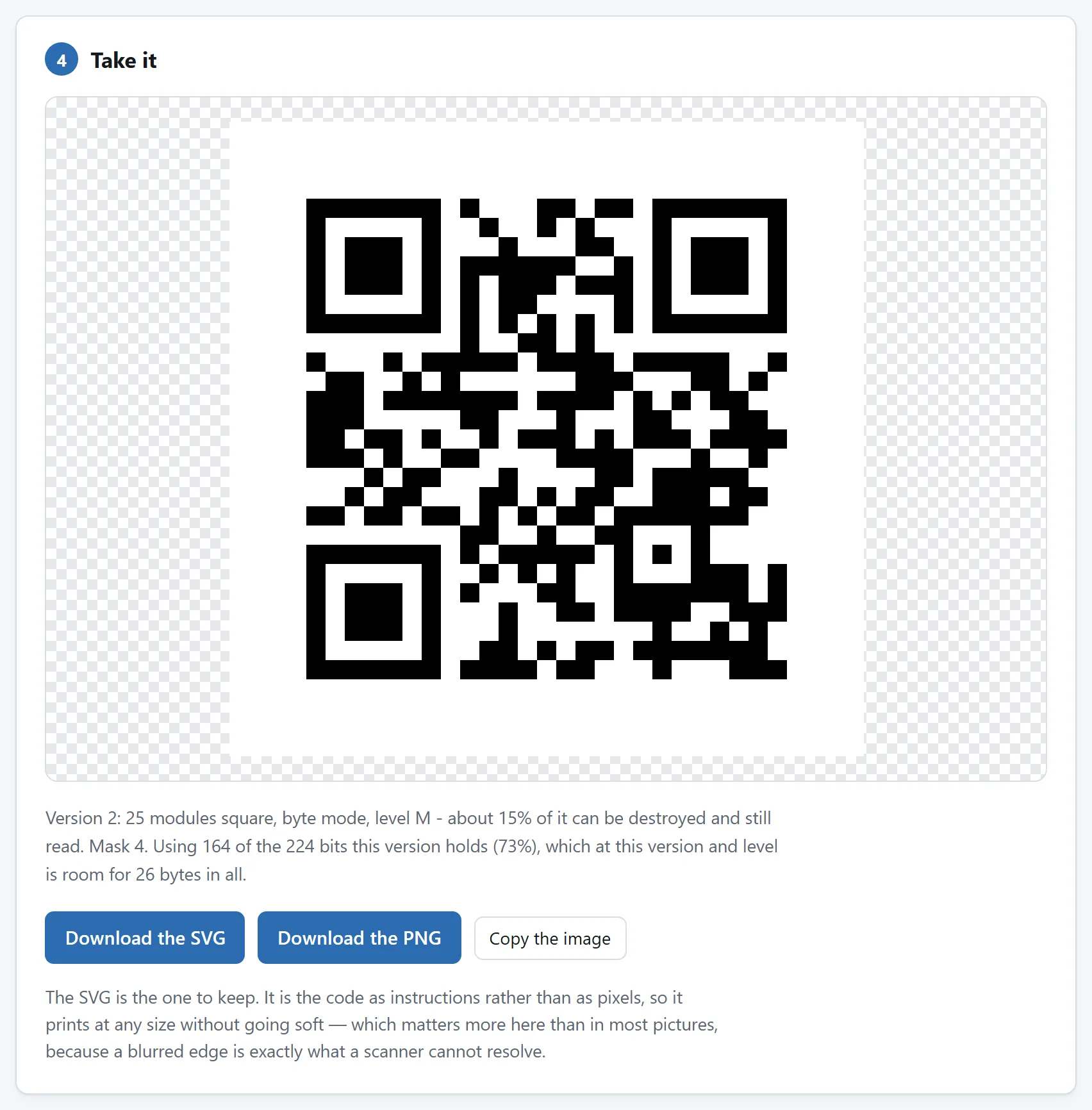
- Make it. Open the QR & Barcode Generator, pick the job — a link, a Wi-Fi network, a contact card — and check the exact string the code will hold, which the page shows rather than hides. Export the SVG for print, the PNG for screens.
- Print one. At the real size, on the real paper, before the run of two hundred.
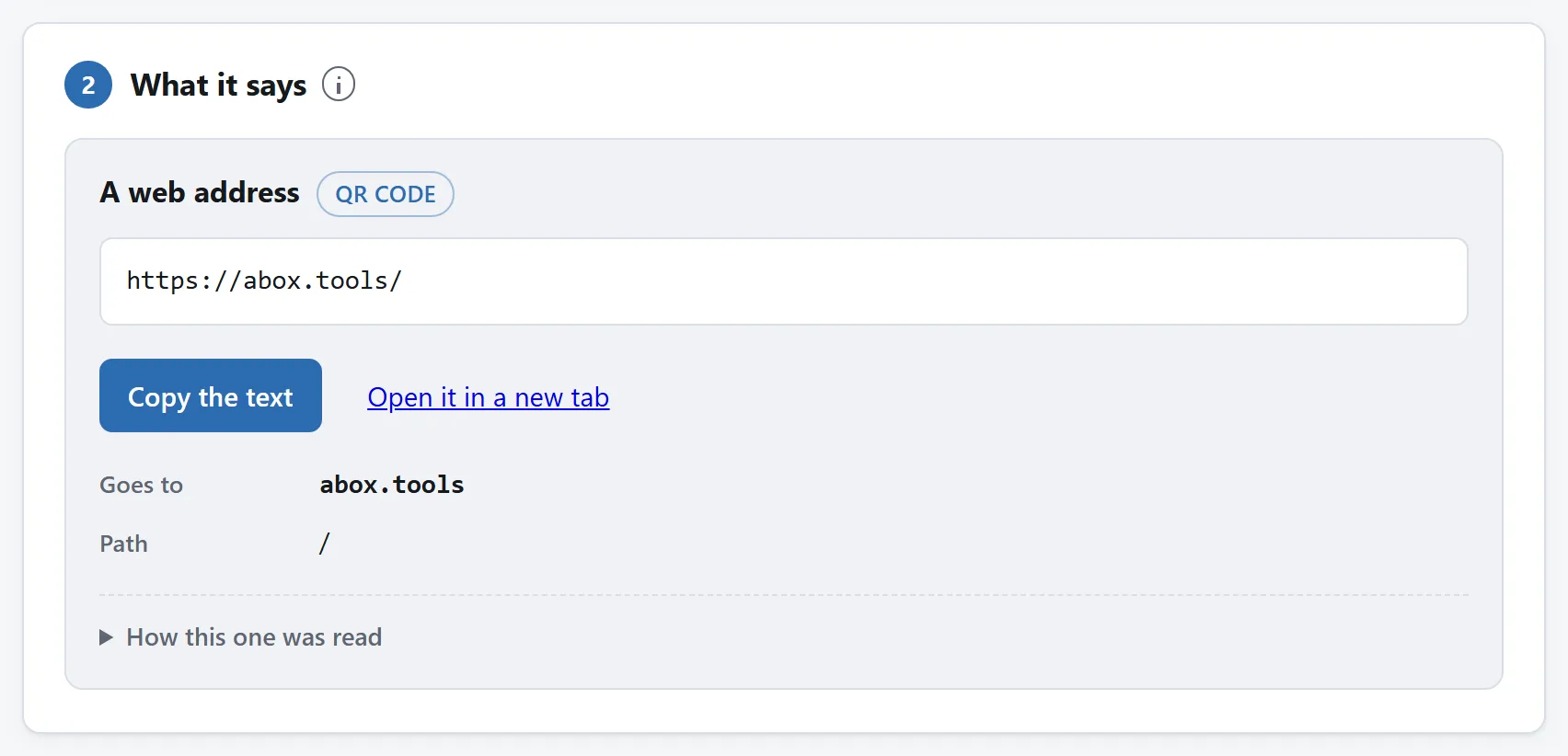
- Prove it. Photograph the test print with a phone — at an angle, in the venue's light — and drop the photo on the QR & Barcode Reader. It shows the decoded payload and, for a link, the host it really reaches. If that matches what you meant, the run is safe.
Both tools run in your browser and send nothing anywhere — which for a Wi-Fi code means the password in it was never typed into someone's website.
What the verification actually catches
- The typo. The most common failure is not the code — it is the URL inside it. Reading it back is the only check that tests what is actually encoded rather than what you meant to paste.
- The size and the distance. A code scanned across a room needs bigger modules than one on a business card. Photographing the test print from where readers will stand is the honest test; the generator's error-correction levels say out loud what each one costs in density.
- The colours. Codes printed light on dark scan, but low-contrast brand palettes often do not. The reader copes with more than most phones — so if it struggles with the photo, the lobby's oldest phone has no chance.
- The crease and the glare. Reed–Solomon correction means a partly covered code still reads — up to the level you chose. A poster destined for weather deserves the higher level and the slightly denser code it costs.
The same reader, for codes that are not yours
Verification is also the safe way to open a QR code somebody else printed. The reader shows the whole address and the host it really reaches before anything opens, and it names the tricks that disguise a link — a username in front of the @, a lookalike alphabet, a redirect. A parking meter sticker deserves that inspection; so does a conference lanyard. Nothing is opened on your behalf, and nothing you scan is sent anywhere.
If you do this every week
Making and checking live on two pages on purpose — each does one job, and each can prove on its own that nothing leaves your machine. But both are open source: MIT-licensed, dependency-free ES modules — the generator's encoder and the reader's Reed–Solomon decoder each with a README that explains it.
If codes ship from your desk weekly, point a coding agent at the repository and ask it for a page that generates and immediately round-trips the rendered code through the decoder — a self-test on every export. The modules were written to be read, and lifting them is what the licence is for.